Jellyfish Lake Banggai Islands – Swim With Stingless Jellyfish
Imagine floating peacefully in a lake surrounded by thousands of jellyfish that pose no danger—a surreal, almost otherworldly experience. Jellyfish Lake on Mbuang-Mbuang Island in the Banggai Islands offers exactly this magical encounter. This unique ecosystem hosts millions of stingless golden jellyfish, creating one of the world’s most extraordinary marine experiences.
Stingless Jellyfish Species
The Golden Jellyfish (Mastigias sp.)
The primary jellyfish species in Jellyfish Lake is a golden-colored Mastigias—closely related to the famous jellyfish of Palau’s Jellyfish Lake. Key characteristics:
- Appearance: Golden-yellow to amber coloring, translucent bell, short tentacles
- Size: 5-15 cm diameter
- Stinging Ability: Extremely reduced nematocysts (stinging cells)—completely harmless to humans
- Age: Ancient species, likely millions of years old in isolated populations
- Movement: Graceful pulsing motion, created by contracting bell
- Density: Millions in the lake, sometimes 10+ per cubic meter
- Symbiosis: Host zooxanthellae (algae) for photosynthesis and nutrition
Why Are They Stingless?
In their isolated lake ecosystem with no predators, jellyfish lost their need for powerful stinging cells. Over millions of years of evolution in this protected environment, their venom became weak and harmless. This makes swimming safely among them possible—a privilege available at only a few locations worldwide.
Location: Mbuang-Mbuang Island
Geographic Details
Mbuang-Mbuang Island is located in the Banggai Archipelago, approximately:
- Distance from Luwuk City: 50-60 kilometers west
- Located: Banggai District, Central Sulawesi
- Island Type: Limestone karst island with unique geography
- Lake Location: Northern section of the island
- Accessibility: Only by boat
Island Characteristics
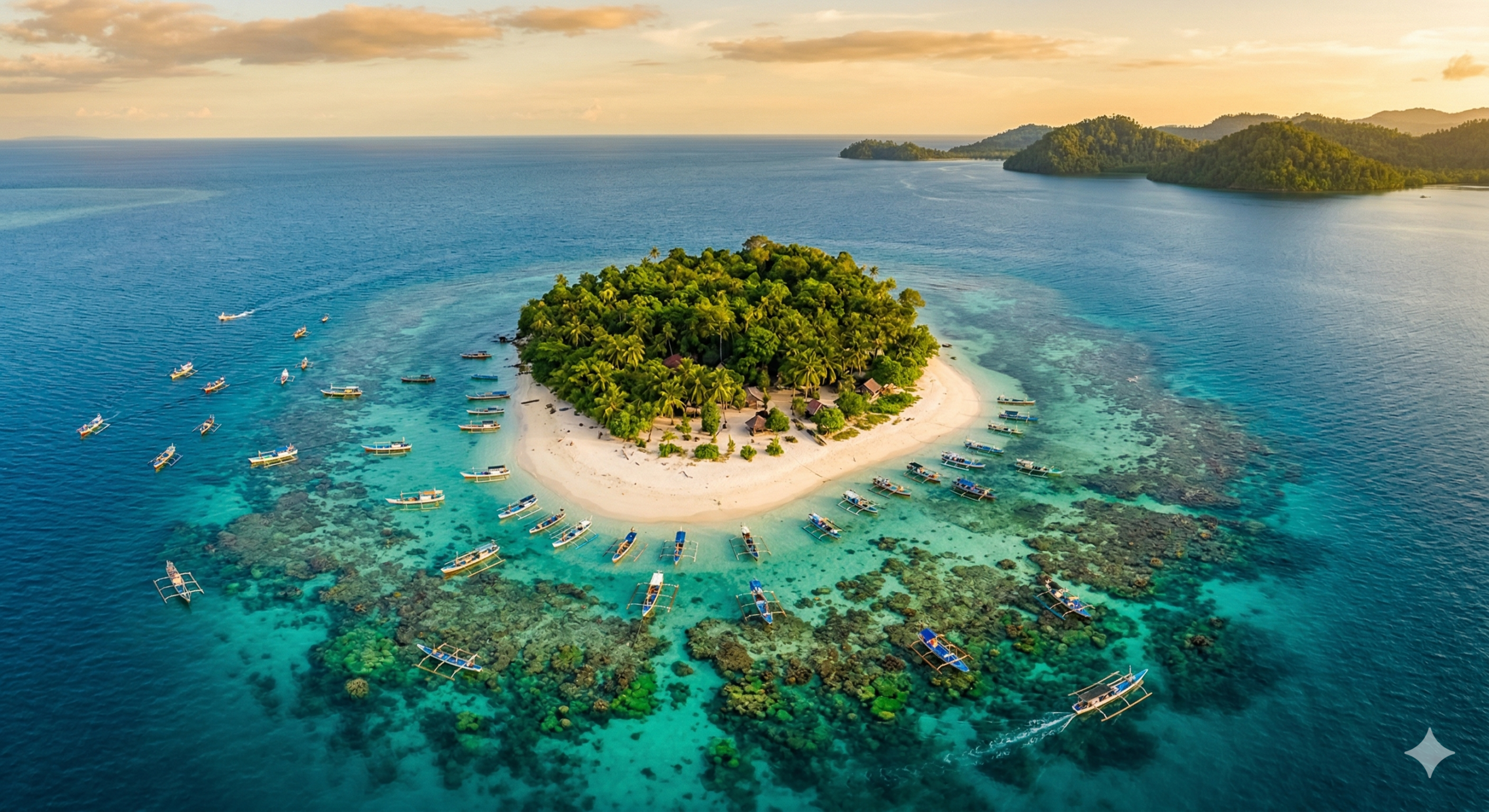
Mbuang-Mbuang Island features dramatic limestone karst formations, similar to Lake Paisupok’s geology. The island is largely undeveloped and pristine, with mangrove forests, rocky shorelines, and the hidden Jellyfish Lake nestled in the interior.
How to Get There
Transportation Overview
Reaching Jellyfish Lake requires a multi-step journey:
Step 1: Luwuk City to Banggai Port (45 minutes)
- Depart from your accommodation in Luwuk
- Drive via car/taxi to Banggai Port (approximate distance: 40 km)
- Scenic drive through rural Central Sulawesi
- Arrive at port, meet boat and crew
Step 2: Banggai Port to Mbuang-Mbuang Island by Speedboat (90-120 minutes)
- Boat Type: Fast speedboat (20-30 person capacity)
- Speed: 25-35 knots (fast, occasionally bumpy)
- Views: Scenic Banggai Sea, nearby islands, dolphins
- Stops: Possible brief stops at small islands or fishing villages
- Cost: Included in tour package
Step 3: Mbuang-Mbuang Island to Jellyfish Lake (20-30 minutes)
- Arrive at island dock or beach
- Trek inland through island terrain (easy walk)
- Pass through mangrove areas and forest
- Arrive at Jellyfish Lake entrance
Total Travel Time: 3-4 hours from Luwuk to lake
The Swimming Experience
What to Expect
Entering Jellyfish Lake is an ethereal, meditative experience. As you wade in:
- Water clarity gradually increases as you move deeper
- First jellyfish appear around 2-3 meters from shore
- Jellyfish density increases with depth
- By 5-8 meters, you’re surrounded by thousands of pulsing golden jellyfish
- It’s peaceful, magical, and completely safe
- Jellyfish ignore you; they drift with currents
- Time seems to slow in this surreal environment
Swimming Guidelines
- Pace: Slow, deliberate movements (avoid sudden actions that startle jellyfish)
- Contact: You can gently touch jellyfish (they’re harmless), but better to observe from distance
- Duration: 1-2 hours swimming in the lake
- Depth: Most swimming occurs in 3-8 meter depths
- Flotation: Life jackets available (recommended for non-swimmers)
- Guides: Always present, monitoring safety
- Group Size: Typically 10-20 swimmers per session
Sensory Experience
The experience engages all senses:
- Visual: Thousands of translucent golden jellyfish in crystalline water
- Tactile: Gentle touch of jellyfish (no sting), cool water
- Auditory: Silence, only your breathing through snorkel, distant bird sounds
- Emotional: Wonder, peacefulness, connection to nature
Safety Considerations
Jellyfish Safety
- Stinging Risk: Extremely low—jellyfish are essentially harmless to humans
- Allergies: Rare individuals with extreme jellyfish allergies should avoid contact (consultation recommended)
- Guidance: Follow guide instructions on swimming and behavior
- Emergency Protocol: First aid available on-site for any minor incidents
Water Safety
- Depth: Maximum swimming depth 8 meters (safe limits enforced)
- Current: Lake is generally calm, minimal currents
- Temperature: 26-28°C (warm and comfortable)
- Visibility: 3-6 meters (excellent for jellyfish viewing)
- Buddy System: Always swim with guides and partners
- Life Jackets: Available for anyone who wants/needs one
Health Precautions
- Ensure you’re in good health before swimming
- Disclose any medical conditions to guides
- Apply high-SPF sunscreen (jellyfish lake has intense sun reflection)
- Stay hydrated
- Don’t swim if you’re overly tired or have just eaten heavily
Photography in Jellyfish Lake
Photography Challenges & Tips
- Underwater Camera: Essential—use GoPro, underwater DSLR, or mirrorless camera
- Light: Bring underwater lighting (flashlight, video light) to illuminate jellyfish
- Depth: Shoot at 3-6 meter depths for best jellyfish density and lighting
- ISO Settings: High ISO (1600-3200) for adequate exposure in water
- Composition: Include yourself or group members for scale reference
- Video: Video captures the jellyfish movement better than still photos
- Post-Processing: Enhance colors (jellyfish are subtle in color) with white balance adjustment
What Not to Do
- Don’t bring large professional camera rigs into the water
- Don’t touch jellyfish aggressively
- Don’t wear heavy makeup or sunscreen that pollutes the water
- Don’t bring flash—it’s disorienting to jellyfish
Comparison with Palau’s Jellyfish Lake
| Aspect | Jellyfish Lake, Banggai | Jellyfish Lake, Palau |
|---|---|---|
| Location | Mbuang-Mbuang Island, Indonesia | Koror, Palau (Micronesia) |
| Accessibility | Less touristy, more remote | More developed, heavily visited |
| Jellyfish Species | Golden Mastigias | Golden Mastigias (same/similar) |
| Jellyfish Density | Very high (millions) | High (millions) |
| Safety | Stingless, safe | Stingless, safe |
| Water Temp | 26-28°C | 26-28°C |
| Tourism Impact | Lower (fewer visitors) | Higher (more regulated) |
| Price | $300-500 (tour included) | $100+ (entry fee) |
| Crowds | Fewer tourists, more intimate | More crowded |
Conservation & Responsible Tourism
Environmental Responsibility
- Use reef-safe sunscreen (avoid oxybenzone and octinoxate)
- Don’t touch jellyfish excessively—minimize disturbance
- Don’t collect jellyfish or take them out of water
- Don’t bring plastics or garbage to the lake
- Don’t drain the lake or remove water
- Support conservation efforts through your visit fees
Jellyfish Population Protection
Jellyfish Lake’s ecosystem is fragile. The isolation that created stingless jellyfish also makes them vulnerable. We limit visitor numbers and enforce strict protocols to protect this unique population.
Tour Packages Including Jellyfish Lake
Jellyfish Lake is included only in longer tour packages (4 days minimum) due to travel distance:
- 4D/3N Tours: Jellyfish Lake as primary activity
- 5D/4N+ Tours: Jellyfish Lake plus other activities
- Private Custom Tours: Can include Jellyfish Lake with advance notice
- Combination Tours: Jellyfish Lake + Diving + Lake Paisupok
Cost: Typically included in package (speedboat, guide, entry, meals) or $200-300 as add-on
Best Time to Visit
Jellyfish Lake is accessible year-round, but conditions vary:
| Season | Weather | Boat Conditions | Visibility | Recommendation |
|---|---|---|---|---|
| Dry (June-Nov) | Sunny, calm | Smooth waters | Excellent | Excellent |
| Wet (Dec-May) | Rainy, occasional | Choppy seas possible | Good | Good (seasickness risk) |
Optimal Months: July-September (calmest seas, best weather)
Frequently Asked Questions
1. Is it really safe to swim with jellyfish?
Yes, absolutely. The jellyfish are harmless—no stinging cells capable of harming humans. Thousands of visitors swim safely each year. The only exceptions are people with extreme jellyfish allergies (rare).
2. Will the jellyfish attack or sting me?
No. Jellyfish don’t attack. They’re passive, drifting organisms. They ignore swimmers completely. Their reduced stinging cells are incapable of penetrating human skin.
3. What happens if someone gets seasick on the boat?
The 90-minute speedboat ride can be bumpy for sensitive travelers. We provide seasickness medication beforehand. Ginger supplements and focusing on the horizon also help. The smoothest waters are in dry season (June-November).
4. Can children visit Jellyfish Lake?
Yes! Children 6+ enjoy the experience with proper supervision. Life jackets are available. Young children should be comfortable in water. The experience is memorable for families.
5. Can I visit Jellyfish Lake as a day trip from Luwuk?
Technically yes, but it’s exhausting (5-6 hours travel for 2 hours swimming). We recommend overnight or multi-day trips. Staying on Mbuang-Mbuang Island or a nearby island allows more relaxation.
6. Is there accommodation on Mbuang-Mbuang Island?
Basic homestays and guesthouses exist on the island. Most visitors stay in Luwuk and make day trips via speedboat. We can arrange island accommodation for multi-day stays.
Book Your Jellyfish Lake Adventure
WhatsApp: Reserve Your Experience
Jellyfish Lake is best experienced as part of a 4+ day tour. Contact us to arrange your complete Luwuk Banggai adventure.
Related Experiences
Lake Paisupok | Diving & Snorkeling | Private Tours | Open Trips